ETH Journal
Ethereum’s ‘Glamsterdam’ upgrade aims to fix MEV fairness
The full scope of Glamsterdam has not yet been finalized, but developers are targeting it to go live in 2026.
Large ETH transfers surfaced after the rally, but conviction across markets stayed thin.
Ethereum’s derivatives market is showing signs of a decisive shift beneath the surface, and price action is about to return above the $3,000 mark. On-chain data suggests trader behavior on major exchanges is shifting into a more accumulative phase.
December 20, 2025, 10:30 pmEthereum (ETH) is showing early signs of a bullish reversal as futures activity, technical breakouts, and institutional inflows indicate that the market may be shifting toward stronger upward momentum.
December 20, 2025, 8:00 pm
The full scope of Glamsterdam has not yet been finalized, but developers are targeting it to go live in 2026.

Ethereum is facing pressure once again due to macro conditions and trader positions, although decentralized finance is experiencing a revival in market focus. ETH has dropped by more than 4% in the last 24 hours to move back towards the $2,800 level, although a brief recapture of the $3,000 mark was seen.

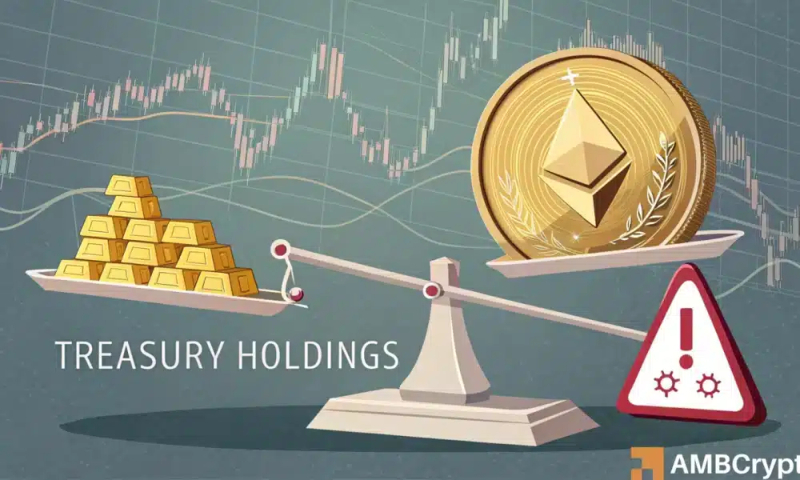
BitMine’s growing Ether holdings are reshaping how investors assess the company’s balance sheet, risk exposure and equity valuation.

Publicly traded firms are now stacking Ethereum, pulling in billions of dollars of ETH.

Recently, both the price of ADA and the ETH price have seen some dips.

Solana set to surpass Ethereum: What it means for the SOL/ETH landscape?

In parallel, the Ethereum Foundation is pushing deeper security upgrades aimed at institutional use, including a move toward 128-bit provable cryptographic security by the end of 2026.
The Ethereum market has seen an eventful display throughout 2025, kicking off the year with bearish momentum, where it witnessed a significant downturn of over 60% as of April. Interestingly, this year also marked the establishment of a new all-time-high for the king of altcoins, reaching values around $4,955 in August.

The zkEVM ecosystem spent a year sprinting on latency. Proving time for an Ethereum block collapsed from 16 minutes to 16 seconds, costs dropped 45-fold, and participating zkVMs now prove 99% of mainnet blocks in under 10 seconds on target hardware. The Ethereum Foundation (EF) declared victory on Dec. 18: real-time proving works.
$2,977.97 +0.21%
$359.37B Market Cap
$8.53B Total Volume (2.37%)
$4,946.05 All Time High -39.82%
until new daily candle